The 21st edition of BreakBulk Europe closed its doors on 18 June after three days of dense networking, deal-making and debate in Rotterdam Ahoy. Over 13,000 professionals from the global project cargo industry filled the venue. Some of the topics from this year’s edition were on Geopolitics, new technologies, Talent attraction, and of course the energy transition, a nod to the energy infrastructure boom driving demand for ever-larger, ever-heavier cargo. However, among heavy-lift specialists and multipurpose vessel operators, an important discussion gained momentum: container carriers are aggressively expanding their market share within the special cargo sector, a competitive shift that is rapidly intensifying.
The flatrack solution
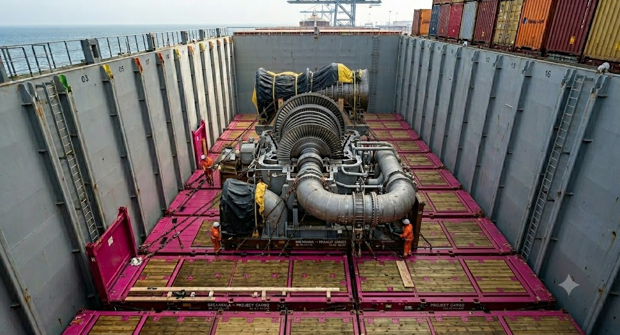
Not all oversized cargo needs a specialised ship. For pieces that are too large for a standard box but not complex enough to justify chartering a multipurpose vessel, the flatrack has become the tool of choice. A flatrack is essentially a container without walls or a roof — a reinforced steel platform that slots into the cell guides of a standard container vessel. Cargo is loaded, lashed directly to the platform, and positioned on deck alongside ordinary boxes. The shipper gets the global reach of the liner network, the frequency of scheduled services, and the predictability of fixed port calls, without needing to charter a whole vessel or wait for the next MPV sailing.
An established trend, still accelerating
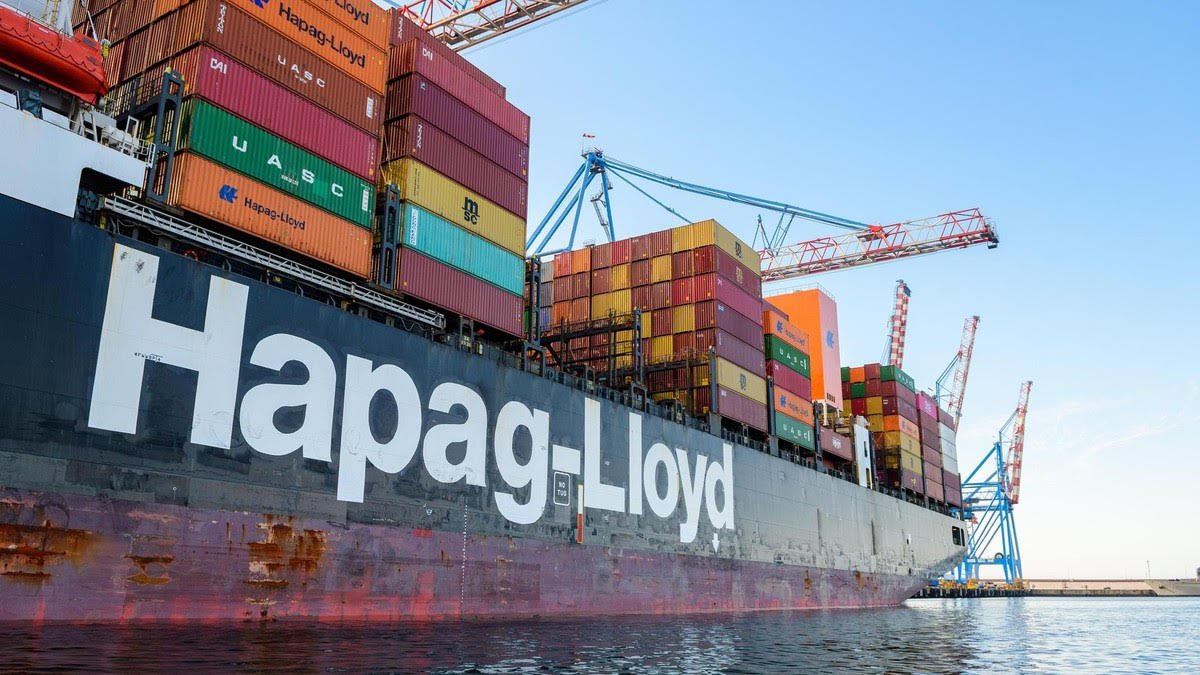
The world’s largest container lines have been building their OOG (out-of-gauge) capabilities for years, and are doubling down. Hapag-Lloyd has been moving growing volumes of pre-lashed breakbulk on flatracks and open-top containers, handling everything from industrial transformers to a fire-fighting helicopter shipped from Hamburg to Chile. CMA CGM’s project cargo division described 2025 as a year of “qualitative evolution”, more complex pieces, earlier involvement in project engineering, deeper integration with its liner network. Ocean Network Express is expanding its OOG volumes globally and digitalising its offer, in line with its 2030 strategy. The demand driver is consistent: the energy transition. Battery storage systems, power generation modules, transformers — all awkward, heavy, and increasingly frequent , are flowing through container vessels on beds of flatracks.
The MPV squeeze
Unfortunately, nobody publishes a clean market split between what moves on container vessels versus multipurpose ships, the segment is too fragmented, the cargo definitions too fluid. But the direction of travel is well documented. Drewry’s latest analysis describes the MPV sector fracturing into two realities in 2026: project carriers serving true heavy-lift and ultra-complex cargo are holding their ground, while the general cargo segment faces structural erosion from container competition. For cargo in the middle, too big for a standard box, not complex enough to need a geared vessel, the container lines are winning on schedule reliability, network breadth, and increasingly on price.
The box wasn’t designed for this. But in shipping, as in most things, necessity is a powerful engineer.