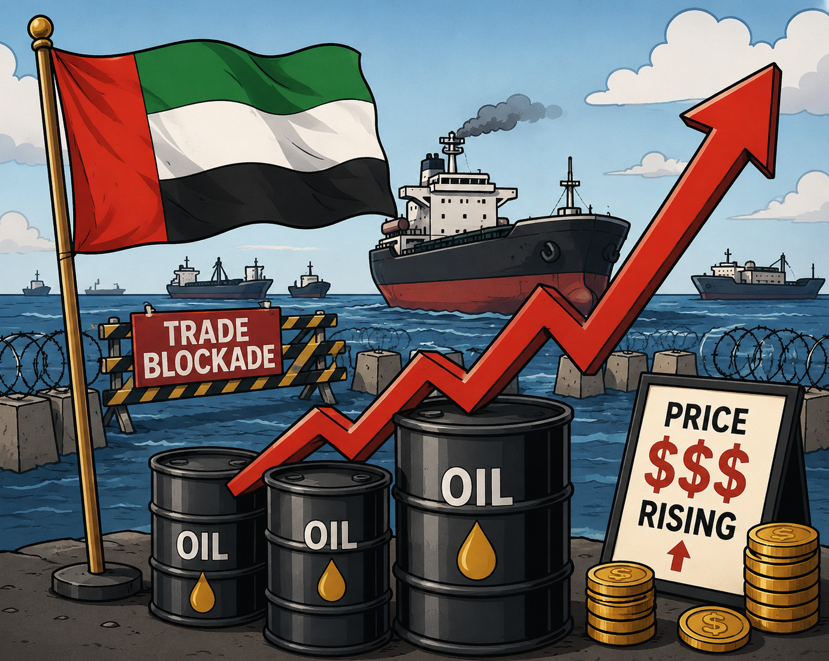
Recent geopolitical tensions in the Middle East, particularly the Houthi attacks against strategic targets in Saudi Arabia, are introducing a new element of uncertainty into the Dry Bulk Shipping market. Concerns over the security of oil infrastructure and major energy routes have contributed to higher crude oil prices, resulting in a corresponding increase in bunker costs.
According to Ship & Bunker, VLSFO price forecasts for Q4 2026 have recently been revised upwards to approximately USD 882/MT, a level that puts significant pressure on shipowners’ operating costs.
Meanwhile, the Forward Freight Agreements (FFA) market in the Dry Bulk sector is showing a downward trend, reflecting more cautious expectations for 2027. The prospect of fleet growth outpacing cargo demand, combined with uncertainty surrounding the global economy and international trade flows, is weighing on forward freight expectations.
We are therefore facing two opposing forces: downward pressure from the FFA market on one side, and rising fuel costs on the other, with bunker prices representing a key component of voyage economics.
This divergence could have interesting implications for negotiations of forward freight contracts covering the first half of 2027.
Charterers may use weaker FFA levels as a benchmark to negotiate more competitive freight rates compared with current market levels. Owners, however, must account for higher bunker costs, which could erode voyage margins and make further reductions in freight rates increasingly difficult to justify.
The result could be a balancing effect, whereby lower freight expectations are at least partially offset by higher fuel costs, potentially leading to more stable freight offers rather than reductions directly proportional to the decline in FFAs.
Much will naturally depend on how long geopolitical tensions in the Middle East persist and how oil prices evolve. A return to more stable conditions could quickly alter this balance, while prolonged instability would strengthen Owners’ negotiating position, at least from a cost perspective.
In this environment, contracts incorporating a Bunker Adjustment Factor (BAF) mechanism could become increasingly attractive, allowing both parties to separate fuel price exposure from the underlying freight market risk.
Ultimately, the combination of weaker FFAs and higher bunker prices could create the conditions for a relatively balanced forward freight market in the first half of 2027. Downward pressure on freight rates may encounter a natural floor in rising voyage costs, encouraging more stable offers and a commercially sustainable compromise between Owners’ and Charterers’ expectations.