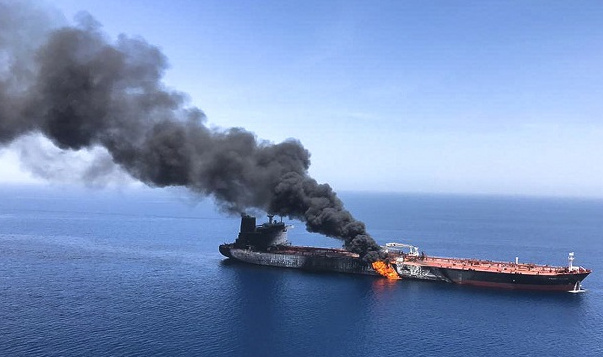
War Risk Has Returned to the Centre of Global Shipping
The maritime industry is facing its most challenging geopolitical environment in decades. The simultaneous escalation of conflicts in the Persian Gulf, the Red Sea, the Black Sea and parts of Africa has fundamentally altered risk assessments across the marine insurance market, forcing shipowners, charterers, cargo interests and governments to reconsider both commercial and operational strategies.
What was once regarded as a specialist insurance class has become a critical factor influencing voyage economics, vessel deployment, crew management and the resilience of international supply chains.
According to market estimates, the international marine insurance market has collected approximately USD 8 billion in war risk premiums since the outbreak of the conflict affecting the Strait of Hormuz and surrounding regions. At the same time, reported war-related claims have already reached approximately USD 3 billion, with insurers expecting further deterioration as losses continue to emerge and develop over time.
The scale of the exposure highlights a key characteristic of marine insurance: claims often materialize gradually and may remain uncertain for extended periods. Consequently, the ultimate cost of the current crises is likely to be significantly higher than current figures suggest.
Shipping’s Most Dangerous Areas
Recent years have demonstrated that maritime geopolitical risk is no longer concentrated in a single region.
As of September 2026, cumulative figures from active conflict zones indicate that 148 vessels have been attacked, eight have been sunk and 48 seafarers have lost their lives globally.
The most significant hotspots include:
Persian Gulf and Strait of Hormuz
The Gulf remains a strategic artery for global energy transportation. Since the escalation of tensions, the region has experienced 58 attacks and 21 fatalities, while approximately 20,000 seafarers have remained on board vessels beyond their normal contractual periods due to operational disruptions and security concerns.
Particularly noteworthy is the Iran-US crisis, which has generated 80 confirmed maritime incidents, including 67 major damage events, one vessel loss and 22 seafarer fatalities. More than half of these incidents involved tankers or gas carriers, reflecting the vulnerability of energy trades to geopolitical confrontation.
Black Sea
Although shipping activity has gradually resumed in certain corridors, the Black Sea remains heavily exposed to warfare-related hazards. The region has recorded 65 attacks, five vessels sunk and 21 fatalities, while operators continue to face threats from naval mines, drones and GPS spoofing.
Red Sea and Bab el-Mandeb
The ongoing Houthi campaign has transformed one of the world’s most important trade routes into a significantly higher-risk operating environment. Beyond conventional attacks against shipping, maritime stakeholders have also reported so-called “double-tap” strikes targeting responders and rescue efforts.
Somalia and the Gulf of Aden
Piracy risks have re-emerged after several years of relative stability. Six vessels have been captured, while between 85 and 90 seafarers remain in extended captivity, underscoring the continuing humanitarian dimension of maritime security challenges.
Insurance Costs Are Reshaping Global Trade Routes
One of the most visible consequences of the current risk landscape has been a significant modification of shipping patterns.
According to industry data, almost half of global trade by value passes through only two strategic passages: the Strait of Malacca and the Taiwan Strait. Other critical chokepoints such as Hormuz, Suez and Bab el-Mandeb continue to play disproportionate roles in global commerce.
The security situation has already prompted many operators to avoid high-risk waters when commercially feasible. Traffic previously routed through the Suez Canal has increasingly been diverted around the Cape of Good Hope despite the longer voyage duration and higher fuel consumption.
The shift is reflected in trade-flow values. While traffic through the Suez corridor has declined sharply relative to pre-crisis expectations, volumes routed around Southern Africa have increased substantially as shipowners seek to limit exposure to war risks and associated insurance costs.
Transit times have consequently lengthened. On key Asia-Europe trades such as Ningbo-Felixstowe, voyages via the Cape of Good Hope typically require significantly more time than the traditional Suez route, increasing operating costs and reducing fleet efficiency.
Pressure on Hull, Cargo and Crew Insurance
The insurance implications extend far beyond additional premiums.
War risk policies today cover a broad range of exposures, including armed conflict, hostile acts, terrorism, sabotage, mines, detention, seizure, requisition, strikes, civil commotion and war-related total loss events affecting both vessels and cargoes.
In response to heightened volatility, insurers have increasingly relied on cancellation notices and enhanced underwriting controls. Areas such as the Red Sea, Persian Gulf, Black Sea, Israel and Lebanon are subject to specific monitoring, and coverage may require advance notification, insurer approval and payment of additional premium.
For cargo interests, the emergence of the JCC Global Cargo Watch List has become a major underwriting tool. Shipments involving territories classified as “Very High”, “Severe” or “Extreme” risk now require prior notification to lead insurers in order to determine applicable war, strike and piracy conditions.
A Hardening Market for Tankers
The tanker sector has been particularly affected.
Approximately 6% of crude tankers and 8% of VLCCs are estimated to have been trapped in the Persian Gulf following the escalation of hostilities, restricting available tonnage and contributing to higher earnings across segments.
By July 2026, the ClarkSea Index had reached approximately USD 41,910 per day, significantly above long-term averages. Rising freight earnings inevitably translate into higher insured values, increasing insurers’ maximum exposures and further supporting premium increases in war risk markets.
At the same time, crew exposure has become a growing concern. The prolonged retention of seafarers in conflict zones represents not only a humanitarian issue but also an emerging source of liability and reputational risk for shipowners and charterers.
The Expanding List of High-Risk Areas
The latest Joint War Committee listed areas now encompass a broad geographical range extending across Africa, the Middle East, the Black Sea region, Russia and parts of South America. Countries and regions such as Iran, Yemen, Israel, Lebanon, Somalia, Libya, the Sea of Azov and the Persian Gulf remain under heightened scrutiny from war risk underwriters.
The practical consequence is clear: voyage planning can no longer be separated from insurance planning. Commercial decisions increasingly require assessment not only of freight rates and fuel consumption, but also of insurance availability, cancellation provisions, aggregation exposures and potential security-related deviations.
Conclusion: Geopolitics Has Become a Core Shipping Risk
The maritime sector has always operated in a world shaped by geopolitical tensions, but the events of recent years have marked a fundamental shift in the scale, frequency and geographical spread of war-related threats.
From the Red Sea to the Black Sea, from the Persian Gulf to the Gulf of Aden, shipowners are facing a risk environment in which conflict, terrorism, piracy, cyber disruption and state-sponsored actions can simultaneously affect vessel safety, crew welfare, cargo interests and the reliability of global supply chains.
The consequence is that war risk insurance is no longer merely a specialist cover purchased to satisfy contractual requirements. It has become a strategic component of voyage planning and commercial decision-making. Routing choices, chartering strategies, cargo movements and even fleet deployment are increasingly influenced by underwriters’ assessments of geopolitical exposure.
At the same time, insurers are being required to evaluate a rapidly evolving threat landscape where traditional conflict zones are intersecting with new forms of asymmetric warfare, including drones, missiles, cyber-attacks and attacks against critical maritime infrastructure. This has heightened uncertainty around both pricing and capacity, while increasing the importance of real-time intelligence and proactive risk management.
Despite these challenges, global shipping continues to demonstrate remarkable resilience. Trade flows adapt, alternative routes emerge, and the insurance market continues to provide capacity for vessels and cargoes operating in some of the world’s most complex environments.
Nevertheless, one reality has become increasingly evident: geopolitical instability can no longer be regarded as an exceptional disruption to maritime trade. It has become a structural element of the operating environment, and a factor that shipowners, charterers, cargo interests and insurers will need to incorporate permanently into their strategic planning.
In today’s market, competitive advantage is no longer determined solely by vessel efficiency, freight rates or commercial expertise. It is increasingly defined by the ability to understand, assess and manage geopolitical risk. For the maritime industry, that capability is rapidly becoming as important as navigation itself.