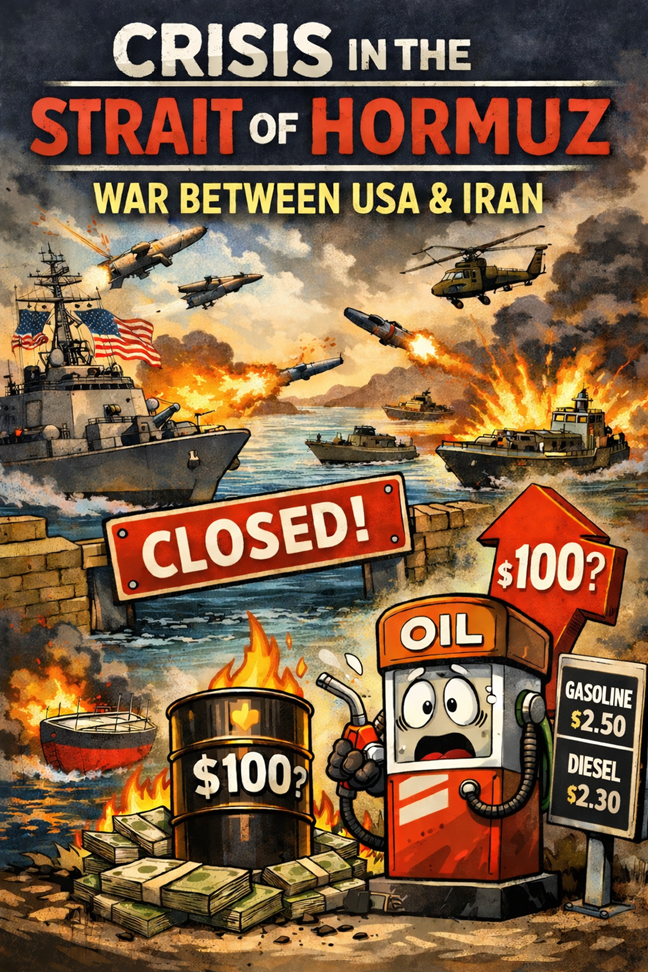
This week, the Strait of Hormuz, the main maritime corridor for transporting oil and gas from the Persian Gulf to global markets, was effectively closed to commercial traffic. The military escalation between Iran, the United States and Israel have led the Iranian authorities and Revolutionary Guards to ban ships from passing through, with multiple warnings of fire against those attempting to cross and repeated threats against naval convoys. The closure has been further reinforced by the withdrawal of war insurance cover for ships, making commercial navigation virtually impossible through the strait.
This passage, located between Iran and Oman, is a key artery for global energy trade, through which approximately 20-30% of oil and liquefied natural gas (LNG) normally transits.
Let’s now go deep inside several economic as well as technical and geopolitical considerations:
📉 Global economic and geopolitical impacts
The shutdown triggered a chain of immediate economic reactions:
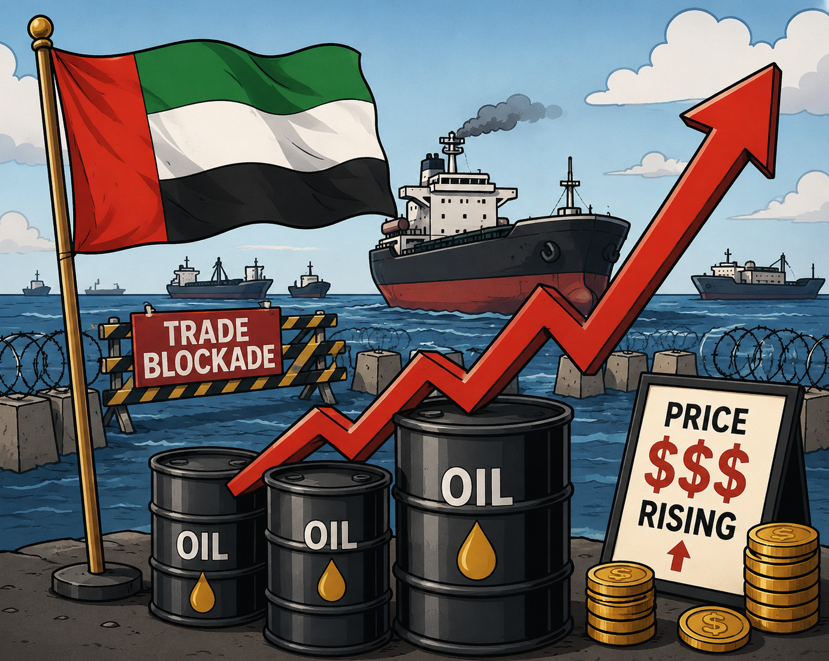
- Tensions on financial markets and inflation: oil prices rose sharply, with Brent above £80 per barrel and potential projections above £100 if the lockdown continues.
- Inflationary pressures: a surge in energy costs is fueling global inflation, putting pressure on central banks and complicating monetary policy decisions.
- Volatility in stock markets: Asian and European stock markets closed in the red on fears of broader economic slowdowns.
- Geopolitical risks: the crisis has reignited tensions between major powers, with diplomatic demands and multilateral pressure to protect maritime routes, such as China’s call to protect ships in the area.
From a geopolitical perspective, the Strait of Hormuz has become a strategic symbol of competition between the United States, its Western allies and areas of the Middle East, increasing uncertainty and the risk of regional military escalation.
The closure of the strait has posed serious challenges for shipowners, freight forwarders and logistics operators so how are they responding to this shock and which strategies can they carry out.
🚢 Strategies to overcome Hormuz Strait closure
- Rerouting and higher operating costs
With the passage blocked, many companies are diverting ships to alternative routes — particularly around the Cape of Good Hope — significantly increasing distances, sailing times and fuel costs.
This practice entails:
- significantly higher transport costs;
- delivery delays;
- congestion at ports of call;
- higher storage and logistics costs.
- Stops, delays and anchorages
In many cases, ships, especially oil tankers and gas tankers, remain anchored in the Gulf to wait for the situation to improve. This creates stagnation of goods and more fragile supply chains for many global industries.
- Suspension of traffic and precautionary measures
Some operators have suspended transit entirely for safety and insurance compliance reasons, exacerbating the effect of commercial disconnection in the corridor.
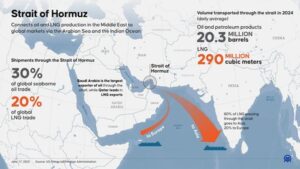
Figure 1: Strait of Hormuz in numbers (Source: US Energy Information Administration)
More specifically, when discussing alternative routes and rerouting, it may be useful to outline the various alternative scenarios that maritime operators are currently evaluating/adopting.
- Circumnavigation of Africa: Route Gulf → Indian Ocean → Cape of Good Hope → Atlantic → Europe/USA
Pros
- No transit through direct war zones
- More affordable insurance coverage
Cons
- +30–40% distance
- +10–15 days of sailing
- Very high fuel consumption
- Congestion in African support ports
This is the most wanted option for the carriers and all the players in the supply chain, but also the most expensive.
- Alternative land pipelines (limited) – Saudi Arabia/United Arab Emirates → Red Sea
Pros
- Completely avoids the strait
- Partial continuity of energy flows
Cons
- Capacity much lower than maritime traffic
- Not replaceable for LNG
- Geopolitical vulnerability on land
It’s important to keep in mind that this should be considered a temporary, non-structural solution, so usable only in very short terms.
- Storage and waiting in the Gulf – Ships anchored awaiting reopening
Pros
- Avoids immediate rerouting costs
- Keeps goods “ready”
Cons
- Freight costs remain unchanged
- Risk of sudden escalation
- Congestion and stress on fleets
During this initial phase the aforementioned represents the most commonly used strategy, but again suitable only in the very short term.
📊 Considerations regarding the impact on oil, markets and fuel prices
It’s clear that, since the importance of the Strait of Hormuz in the global oil trade, the distribution of crude oil and natural gas has been one of the most affected components.
All the above situation has led to rising energy prices; Brent and WTI have seen sharp increases, reflecting uncertainty over supplies. The prospect of a reduction of around 20–30% in maritime oil exports is pushing prices towards thresholds that are already above USD 80 per barrel and potentially above USD 100 if the blockade persists. Moreover, it only fuels an increase in freight rates, not only but especially tankers and LNG carriers (also containers and general cargo).
So, this casts even more uncertainty on an already unstable market situation leading investors to fear sharp contractions.
Again, the increase in crude oil prices is quickly reflected in rising fuel and distribution costs:
- more expensive fuel at the pump (we are already experiencing that).
- increases in diesel and heating oil for transport and industry.
- higher production costs for energy-intensive sectors (chemicals, steel, transport).
This dynamic will tend to amplify global inflationary pressures, with knock-on effects on national budgets and consumer spending.
An honorable mention at the end of the speech concerns insurance impacts.
The Strait of Hormuz and rising tensions have created a crisis in the marine insurance market:
🛡️ War risk coverage suspended
Many marine insurance companies, including large P&I and specialist insurers, have cancelled or suspended war risk coverage for transits through the Gulf, making it virtually impossible or extremely expensive to transit without coverage.
📈 Premiums rising sharply
For routes still covered, insurance premiums are skyrocketing, with increases expected to exceed 50–100% or the imposition of very high deductibles.
🚫 Risk of total withdrawal of support
In some cases, insurance companies are refusing to issue new policies for regions adjacent to the strait, leading some companies to suspend traffic altogether.
These insurance factors, combined with operational difficulties, make global logistics even more expensive and risky, prompting many operators to rethink their risk coverage and route diversification strategies.
In conclusion, this week’s closure of the Strait of Hormuz is not just a localised geopolitical episode: it represents a turbo shock for global energy markets, maritime transport and supply chains, with impacts on energy prices, insurance, logistics costs and global inflation.
The situation remains highly volatile and depends on the evolution of the military conflict, diplomatic responses and industrial strategies adopted in the coming days and weeks.
Stay tuned for further updates