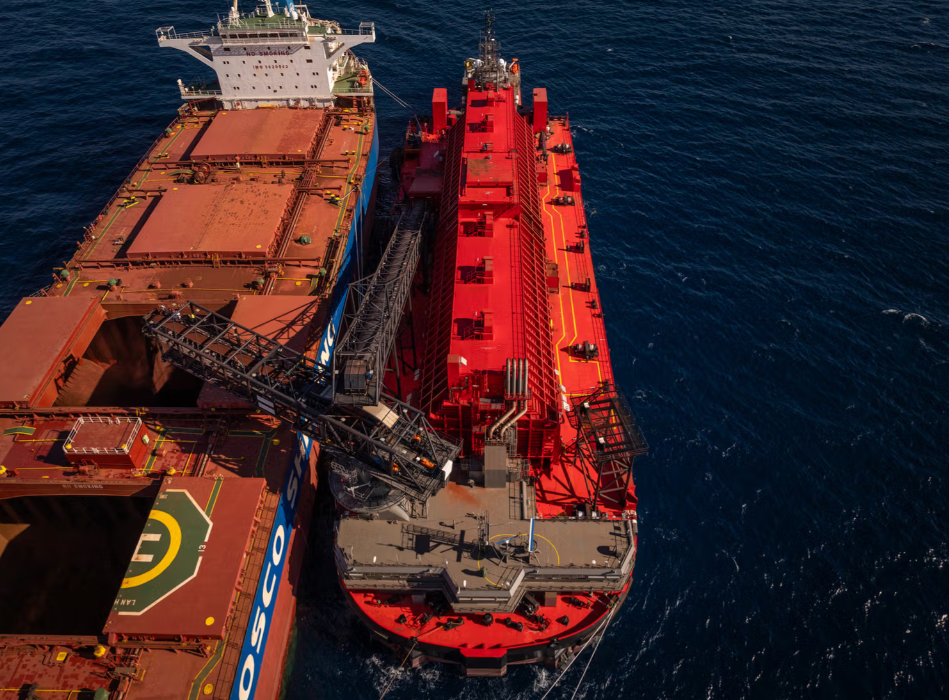
India is rapidly reshaping the global iron ore landscape. Surging steel demand, weather-related disruptions, and a shortage of high-grade ore are driving the country’s steelmakers to seek increasing volumes from overseas markets. Imports have climbed to their highest level in seven years, fuelled by attractive global prices and sustained buying interest from the nation’s largest producers.
While domestic demand accelerates, local mining has struggled to keep pace. Delays in ramping up newly auctioned mines and the limited availability of premium-grade ore have pushed India to rely more heavily on imports. From January to October, inbound iron ore volumes exceeded 11 million tonnes, more than double the same period last year and well above the 2019–2024 average of roughly 3 million tonnes. Brazil has emerged as the leading supplier, overtaking long-time dominant exporter Australia.
At home, operational challenges have further tightened the supply. Intense monsoon rains in Odisha, responsible for nearly 55% of the country’s total production, temporarily slowed mining activity and reduced availability. Although India’s output rose to 289 million tonnes in fiscal 2025, up from 277 million tonnes the previous year, the increase has not been enough to satisfy the country’s rapidly expanding steel industry, now the world’s second-largest crude steel producer.
Among buyers, JSW Steel has taken a prominent role, taking advantage of lower international prices and logistical efficiencies provided by port-based mills across western India.
This shift has not gone unnoticed across the global mining sector. Brazilian producer Vale is positioning itself to capture India’s emerging demand, forecasting that the country could nearly double steel production by the end of the decade to around 300 million tonnes within five to seven years. The strategy coincides with weakening or stagnant consumption in China, where steel output has hovered around 1 billion tonnes and may gradually decline.
India has quickly become a key growth market for Vale, which now exports roughly 10 million tonnes of iron ore to the country, compared with virtually none just a few years ago. The company highlights strong operational synergies, noting that its high-quality ore blends efficiently with Indian raw materials. Beyond India, Vietnam is also gaining traction, with sales projected to reach 8 million tonnes in 2025.
To support this expansion, Vale is deploying around USD 13 billion into its Novo Carajás project, which will add 20 million tonnes of annual capacity once fully operational. The development is nearly 80% complete and expected to come online in late 2026. Meanwhile, the company plans to double copper production by 2035 and is targeting a return to the top of global iron ore supply rankings. By the end of 2024, Vale’s output reached 327.67 million tonnes, the highest since 2018, alongside a rise in pellet production to 36.89 million tonnes.
With steelmaking capacity climbing and global suppliers recalibrating portfolios, India now stands at the centre of a structural shift in international iron ore trade. If its growth trajectory holds, the country could redefine supply routes and trade relationships, cementing its role as one of the world’s most influential markets for decades to come.